A team from the Centre de recherche Azrieli du CHU Sainte-Justine has uncovered a promising new treatment avenue for brain arteriovenous malformations (bAVMs), rare abnormalities of the brain’s blood vessels. These malformations can lead to bleeding, seizures, and other serious neurological complications. Treatment options remain extremely limited, and no approved drug therapy currently exists for this disease. By identifying a key role for the KIT gene in the development of these lesions and demonstrating that clinically available drugs can curb their formation, the researchers shed new light on the disease. The study, led by researcher Alexandre Dubrac and published in the Journal of Clinical Investigation (lien à venir), points toward new therapeutic possibilities for affected patients.
Vascular abnormalities with serious consequences
Brain arteriovenous malformations are rare developmental defects affecting the brain’s vascular network. Under normal conditions, blood flows from arteries into tiny capillaries, where oxygen and nutrients are exchanged with surrounding tissues, before returning through veins. In an arteriovenous malformation, this architecture is profoundly disrupted: vessels become enlarged, twisted, and dysfunctional, blurring the distinction between arteries, capillaries, and veins. Blood flows too rapidly, exchanges are impaired, and vessel walls become fragile, increasing the risk of rupture and hemorrhage.
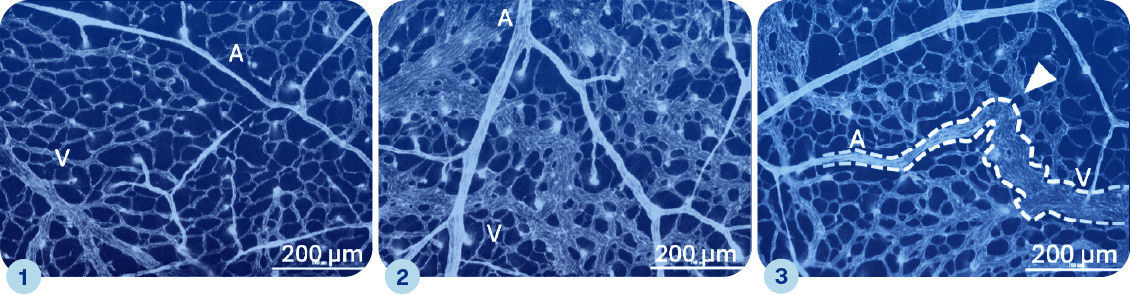
Image 1 : Cerebral surface vasculature of an 8-day-old mouse.
Image 2 : Cerebral surface vasculature of an 8-day-old mutant mouse, illustrating increased vascular tortuosity
Image 3 : Cerebral surface vasculature of an 8-day-old mutant mouse, showing abnormal connections between arteries (A) and veins (V).
Credit: Élise Drapé.
Clinically, these malformations are often diagnosed only after significant neurological symptoms appear, such as unusual headaches, seizures, or even brain hemorrhage. Current treatments rely mainly on procedures such as embolization, radiation therapy, or surgery. However, not all lesions can be treated in this way, particularly larger malformations that may be considered too risky to operate on. To date, no validated drug therapy is available for this condition.
An oncology-inspired therapeutic lead
Against this backdrop, the work of Élise Drapé, a PhD student at the time of the study, identified a particularly compelling target: the KIT gene. Well known in cancer biology, KIT is already targeted by several drugs used in clinical practice, including treatments for certain forms of leukemia. Using a mouse model that reproduces the disease, the research team observed an overexpression of KIT in affected blood vessels. This finding was subsequently confirmed in a human tissue sample obtained through a collaboration with Dr. Ethan Winkler, a neurosurgeon at the University of California, San Francisco.
“What is particularly exciting is that this finding allows us to consider using molecules that are already well characterized, rather than starting from scratch,” says Élise Drapé. “It fundamentally changes how we can think about developing a treatment.”
A collaboration at the intersection of biology and data science
One of the study’s strengths lies in the complementary approaches of experimental biologist Élise Drapé and bioinformatician Gael Cagnone. Using single-cell transcriptomics—a cutting-edge technology that maps gene activity cell by cell within a tissue—the team was able to identify the molecular signatures most strongly associated with the disease. Faced with a vast number of genes and potential targets, bioinformatic analyses played a critical role in narrowing the field by comparing the disease signature with those of other conditions and predicting which existing drugs might act on it. “These data help us understand in great detail what is happening in the brain, both in health and disease,” explains Gael Cagnone. “We identify the most important signals, compare them to those seen in other disorders, and determine whether useful drugs already exist. The goal is to focus our efforts on the most promising therapeutic avenues.”
Promising results that require further validation
In the study, three different strategies were used to block KIT activity, including one drug already used in humans. All three approaches produced beneficial effects, limiting or preventing the formation of developing malformations. The team remains cautious, however, as these findings currently apply only to the early stages of the disease and not to fully established lesions. Additional studies are now underway to determine whether these treatments could also be effective at more advanced stages of the disease, paving the way toward precision medicine approaches.
“We are bringing forward a concrete therapeutic proposal for patients who currently have no validated drug treatment options,” says Alexandre Dubrac. “The next step will be to better understand under which circumstances these approaches could be translated into clinical practice.” These findings open new possibilities for a disease that has long lacked therapeutic options, while highlighting the potential of drug repurposing as a strategy to accelerate the development of new treatments.
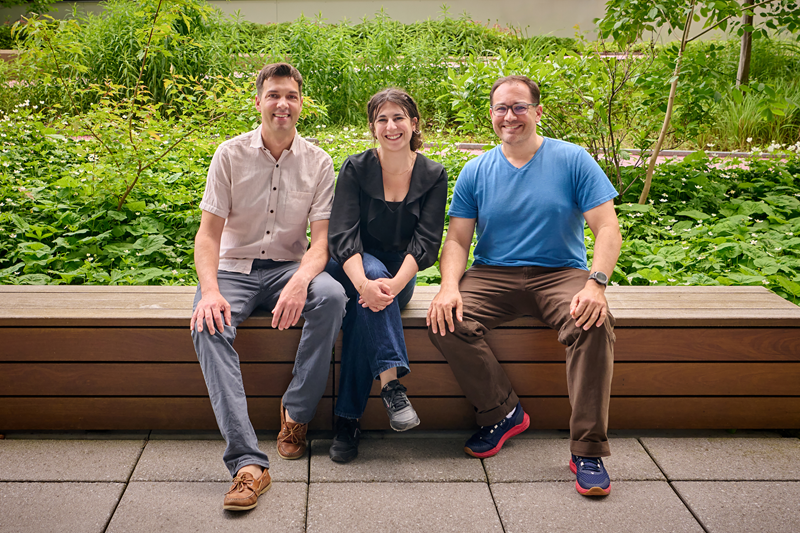
Photo (from left to right) : Gael Cagnone, Élise Drapé and Alexandre Dubrac © CHU Sainte‑Justine (Véronique Lavoie)